St. Louis 3PL Services: Why Location Matters for Retail Distribution

Blogs

Where your 3PL sits determines how fast your customers get their orders and what you pay to get them there. For retail brands distributing nationally, that geography decision is one of the most important decisions in your logistics strategy. St. Louis consistently comes out at the top of that analysis.

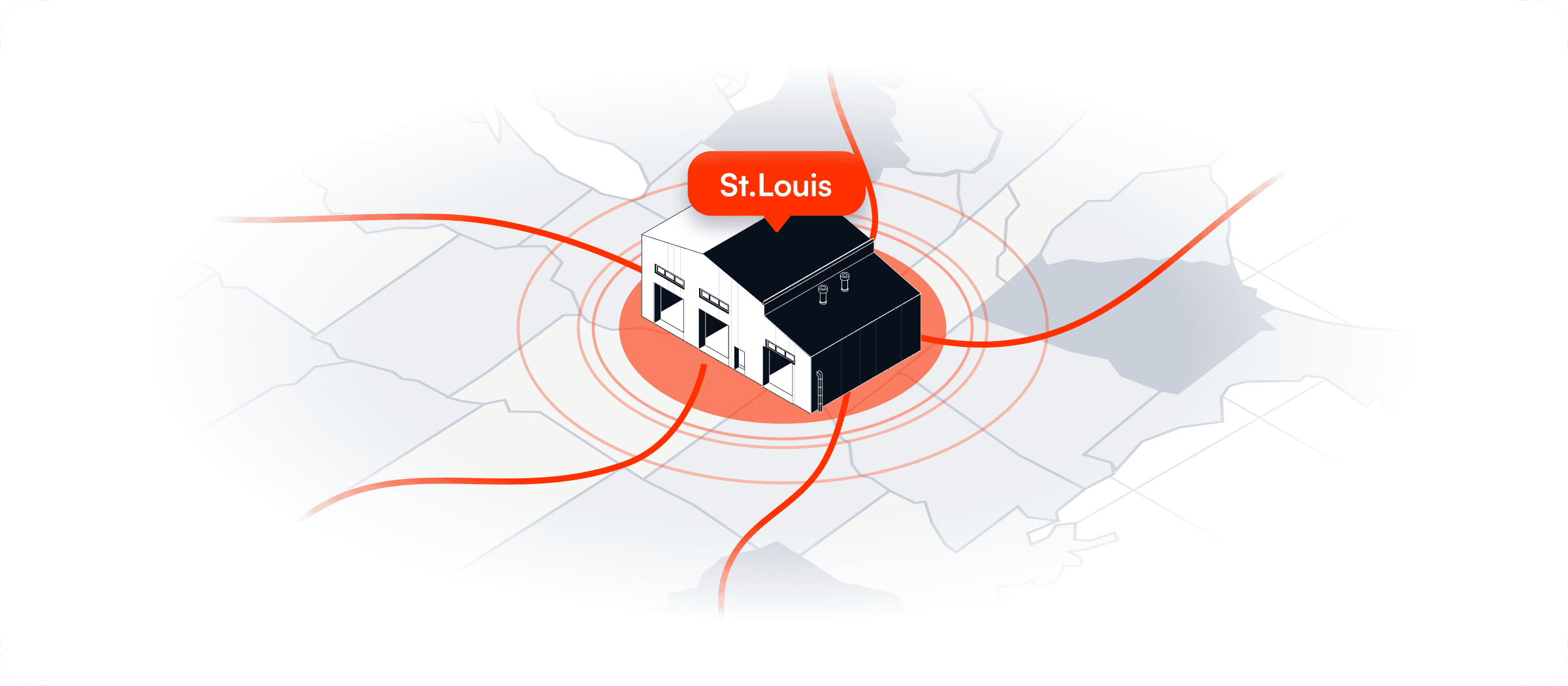
The greater St. Louis region sits within 500 miles of one-third of the U.S. population, with five major interstates, six Class I railroads, and three river systems converging in the metro area (Greater St. Louis, Inc.). From ITF Group's Hazelwood facility, two-day ground shipping reaches approximately 80% of the continental U.S. For a furniture or apparel brand running national DTC distribution, that coverage eliminates the need for multiple coastal warehouses just to hit delivery windows.

What "Central Location" Actually Means for Retail Brands

Warehouse supervisors reviewing CONFIRMED shipment on tablet and a clipboard for chain‑of‑custody verification

The geographic advantage of a Midwest 3PL is not theoretical. It shows up in freight costs and transit times on every outbound shipment.

A brand fulfilling DTC orders from a single East Coast warehouse pays above-average rates on everything moving west of the Mississippi. A brand fulfilling from a single West Coast warehouse faces the same problem in reverse. Splitting inventory across two coasts solves the transit problem but doubles your warehousing complexity, minimum inventory requirements, and carrying costs.

A centralized St. Louis operation gives most retail brands a better answer: one inventory pool, one set of WMS integrations, and freight rates that are competitive on both coasts because you are never shipping against yourself on distance. The Midwest fulfillment cost advantage is real and quantifiable before you sign a contract.

What "Central Location" Actually Means for Retail Brands

Warehouse supervisors reviewing CONFIRMED shipment on tablet and a clipboard for chain‑of‑custody verification

The geographic advantage of a Midwest 3PL is not theoretical. It shows up in freight costs and transit times on every outbound shipment.

A brand fulfilling DTC orders from a single East Coast warehouse pays above-average rates on everything moving west of the Mississippi. A brand fulfilling from a single West Coast warehouse faces the same problem in reverse. Splitting inventory across two coasts solves the transit problem but doubles your warehousing complexity, minimum inventory requirements, and carrying costs.

A centralized St. Louis operation gives most retail brands a better answer: one inventory pool, one set of WMS integrations, and freight rates that are competitive on both coasts because you are never shipping against yourself on distance. The Midwest fulfillment cost advantage is real and quantifiable before you sign a contract.

What "Central Location" Actually Means for Retail Brands

Warehouse supervisors reviewing CONFIRMED shipment on tablet and a clipboard for chain‑of‑custody verification

The geographic advantage of a Midwest 3PL is not theoretical. It shows up in freight costs and transit times on every outbound shipment.

A brand fulfilling DTC orders from a single East Coast warehouse pays above-average rates on everything moving west of the Mississippi. A brand fulfilling from a single West Coast warehouse faces the same problem in reverse. Splitting inventory across two coasts solves the transit problem but doubles your warehousing complexity, minimum inventory requirements, and carrying costs.

A centralized St. Louis operation gives most retail brands a better answer: one inventory pool, one set of WMS integrations, and freight rates that are competitive on both coasts because you are never shipping against yourself on distance. The Midwest fulfillment cost advantage is real and quantifiable before you sign a contract.


St. Louis 3PL for Furniture and Apparel Brands

The geographic argument is table stakes. What separates St. Louis 3PL options is operational capability for retail-specific freight.

For furniture retailers: Oversized freight, white-glove last-mile delivery, and lot-level inventory tracking are not standard 3PL capabilities. ITF Group's warehousing and fulfillment operation is built for high-value, complex freight: cross-docking inbound pallets in under 24 hours and matching outbound loads to carriers with actual white-glove capability on residential lanes.

For apparel brands: High SKU counts, strict retailer compliance requirements, and elevated return rates require a warehouse with dedicated processes for each. ITF handles B2B wholesale replenishment and DTC parcel orders from a unified inventory pool, with returns processing built into the same workflow rather than outsourced to a separate facility.

Both categories benefit from ITF's position as both a licensed freight broker and a full-service 3PL. When capacity tightens on a specific lane or a new market requires specialized equipment, the brokerage network finds options that a warehouse-only provider cannot access.

St. Louis 3PL for Furniture and Apparel Brands

The geographic argument is table stakes. What separates St. Louis 3PL options is operational capability for retail-specific freight.

For furniture retailers: Oversized freight, white-glove last-mile delivery, and lot-level inventory tracking are not standard 3PL capabilities. ITF Group's warehousing and fulfillment operation is built for high-value, complex freight: cross-docking inbound pallets in under 24 hours and matching outbound loads to carriers with actual white-glove capability on residential lanes.

For apparel brands: High SKU counts, strict retailer compliance requirements, and elevated return rates require a warehouse with dedicated processes for each. ITF handles B2B wholesale replenishment and DTC parcel orders from a unified inventory pool, with returns processing built into the same workflow rather than outsourced to a separate facility.

Both categories benefit from ITF's position as both a licensed freight broker and a full-service 3PL. When capacity tightens on a specific lane or a new market requires specialized equipment, the brokerage network finds options that a warehouse-only provider cannot access.

St. Louis 3PL for Furniture and Apparel Brands

The geographic argument is table stakes. What separates St. Louis 3PL options is operational capability for retail-specific freight.

For furniture retailers: Oversized freight, white-glove last-mile delivery, and lot-level inventory tracking are not standard 3PL capabilities. ITF Group's warehousing and fulfillment operation is built for high-value, complex freight: cross-docking inbound pallets in under 24 hours and matching outbound loads to carriers with actual white-glove capability on residential lanes.

For apparel brands: High SKU counts, strict retailer compliance requirements, and elevated return rates require a warehouse with dedicated processes for each. ITF handles B2B wholesale replenishment and DTC parcel orders from a unified inventory pool, with returns processing built into the same workflow rather than outsourced to a separate facility.

Both categories benefit from ITF's position as both a licensed freight broker and a full-service 3PL. When capacity tightens on a specific lane or a new market requires specialized equipment, the brokerage network finds options that a warehouse-only provider cannot access.


What St. Louis Infrastructure Supports

The logistics infrastructure in greater St. Louis is one of the densest multimodal networks in the country. Five interstates (I-44, I-55, I-64, I-70, and I-270) provide direct access to every major population corridor. Lambert International Airport handles cargo alongside passenger operations. The Mississippi, Missouri, and Illinois rivers give St. Louis one of the largest inland port systems in the country.

Warehouse supervisors reviewing CONFIRMED shipment on tablet and a clipboard for chain‑of‑custody verification

For retail brands moving product from overseas manufacturers, that infrastructure means options at every stage: ocean freight arriving at Gulf Coast ports can route north by rail to St. Louis, or domestic manufacturing and import freight can move via intermodal from either coast. Intermodal freight from a St. Louis hub often beats over-the-road rates on lanes exceeding 500 miles, which matters when you are moving volume from the coasts into central distribution.

What St. Louis Infrastructure Supports

The logistics infrastructure in greater St. Louis is one of the densest multimodal networks in the country. Five interstates (I-44, I-55, I-64, I-70, and I-270) provide direct access to every major population corridor. Lambert International Airport handles cargo alongside passenger operations. The Mississippi, Missouri, and Illinois rivers give St. Louis one of the largest inland port systems in the country.

Warehouse supervisors reviewing CONFIRMED shipment on tablet and a clipboard for chain‑of‑custody verification

For retail brands moving product from overseas manufacturers, that infrastructure means options at every stage: ocean freight arriving at Gulf Coast ports can route north by rail to St. Louis, or domestic manufacturing and import freight can move via intermodal from either coast. Intermodal freight from a St. Louis hub often beats over-the-road rates on lanes exceeding 500 miles, which matters when you are moving volume from the coasts into central distribution.

What St. Louis Infrastructure Supports

The logistics infrastructure in greater St. Louis is one of the densest multimodal networks in the country. Five interstates (I-44, I-55, I-64, I-70, and I-270) provide direct access to every major population corridor. Lambert International Airport handles cargo alongside passenger operations. The Mississippi, Missouri, and Illinois rivers give St. Louis one of the largest inland port systems in the country.

Warehouse supervisors reviewing CONFIRMED shipment on tablet and a clipboard for chain‑of‑custody verification

For retail brands moving product from overseas manufacturers, that infrastructure means options at every stage: ocean freight arriving at Gulf Coast ports can route north by rail to St. Louis, or domestic manufacturing and import freight can move via intermodal from either coast. Intermodal freight from a St. Louis hub often beats over-the-road rates on lanes exceeding 500 miles, which matters when you are moving volume from the coasts into central distribution.


5 Questions to Ask a St. Louis 3PL Before You Commit

Choosing a 3PL on location alone is a mistake. The right partner has the operational capability to match the geographic advantage. Ask:

  1. What is your WMS, and does it support unified inventory across B2B, DTC, and marketplace channels?

  2. Do you operate as a licensed freight broker, or do you rely entirely on contracted carriers?

  3. What is your average inbound receiving-to-available time?

  4. How do you handle retailer routing guide compliance for wholesale accounts?

  5. What is your pricing model: cost-plus transparency or bundled rates?

A St. Louis 3PL that answers those questions with specifics, not generalities, is a partner worth evaluating further. Read what to look for when choosing a 3PL before you start comparing contracts.

5 Questions to Ask a St. Louis 3PL Before You Commit

Choosing a 3PL on location alone is a mistake. The right partner has the operational capability to match the geographic advantage. Ask:

  1. What is your WMS, and does it support unified inventory across B2B, DTC, and marketplace channels?

  2. Do you operate as a licensed freight broker, or do you rely entirely on contracted carriers?

  3. What is your average inbound receiving-to-available time?

  4. How do you handle retailer routing guide compliance for wholesale accounts?

  5. What is your pricing model: cost-plus transparency or bundled rates?

A St. Louis 3PL that answers those questions with specifics, not generalities, is a partner worth evaluating further. Read what to look for when choosing a 3PL before you start comparing contracts.

5 Questions to Ask a St. Louis 3PL Before You Commit

Choosing a 3PL on location alone is a mistake. The right partner has the operational capability to match the geographic advantage. Ask:

  1. What is your WMS, and does it support unified inventory across B2B, DTC, and marketplace channels?

  2. Do you operate as a licensed freight broker, or do you rely entirely on contracted carriers?

  3. What is your average inbound receiving-to-available time?

  4. How do you handle retailer routing guide compliance for wholesale accounts?

  5. What is your pricing model: cost-plus transparency or bundled rates?

A St. Louis 3PL that answers those questions with specifics, not generalities, is a partner worth evaluating further. Read what to look for when choosing a 3PL before you start comparing contracts.


FAQs

01

Why is St. Louis considered a strong location for national retail distribution?

St. Louis sits near both the geographic and population centers of the United States. The greater metro area is within 500 miles of one-third of the U.S. population, which translates to two-day ground shipping coverage for most of the country from a single facility.

02

Does a centralized 3PL location really reduce freight costs?

Yes, for most retail brands. Shipping from a central location shortens average transit distances compared to operating from either coast, which lowers carrier rates and reduces the premium for two-day delivery. The savings are most significant for brands that currently fulfill from a single coastal location.

03

What types of retail freight does ITF Group handle out of St. Louis?

ITF handles truckload, LTL, intermodal, and parcel freight across retail categories including furniture, apparel, consumer goods, and high-value merchandise. The facility is FDA and TSA certified and equipped for lot-level and serial-level inventory tracking.

04

How does a St. Louis 3PL support Amazon and marketplace fulfillment?

ITF's fulfillment operation handles FBA prep (labeling, poly-bagging, carton configuration) as part of the standard workflow. Marketplace orders pull from the same inventory pool as DTC and wholesale orders, which eliminates the oversell risk that comes from channel-siloed stock.

05

Is a single St. Louis warehouse enough for national retail distribution?

For most retail brands, yes. Two-day ground coverage reaching 80% of the U.S. population from a single St. Louis facility eliminates the need for split inventory across multiple warehouses in the early and mid-growth stages. High-volume brands with strong West Coast or Northeast concentration may eventually need a secondary node, but a centralized start reduces complexity while the network scales.

See what two-day coverage from the center of the country looks like for your operation. Get a warehouse quote from ITF Group in St. Louis.

We focus on the now.
You focus on what’s next.

ITF Group Headquarters
11990 Missouri Bottom Rd, Hazelwood, MO, US, 63042.
Trucking, Warehousing & Logistics Services in St. Louis | Serving businesses nationwide since 2012

©

2026

.

All rights reserved.

We focus on the now.
You focus on what’s next.

ITF Group Headquarters
11990 Missouri Bottom Rd, Hazelwood, MO, US, 63042.
Trucking, Warehousing & Logistics Services in St. Louis | Serving businesses nationwide since 2012

©

2026

.

All rights reserved.

We focus on the now.
You focus on what’s next.

ITF Group Headquarters
11990 Missouri Bottom Rd, Hazelwood, MO, US, 63042.
Trucking, Warehousing & Logistics Services in St. Louis | Serving businesses nationwide since 2012

©

2026

.

All rights reserved.