One Broker, Every Mode: Why Shippers Are Consolidating Their Freight Partners
Blogs

Most shippers didn’t set out to work with five or six freight vendors at once. It happened one lane at a time: a truckload carrier for the Midwest, an LTL provider for smaller orders, an intermodal broker for the long-haul lanes where rail makes sense, a forwarder for anything crossing a border. Each relationship made sense on its own. Together, they add up to a lot of separate points of contact, separate invoices, and separate people to call when something goes wrong.
A freight broker that covers truckload, LTL, intermodal, and international forwarding under one contract and one point of contact is a different model. It doesn’t work for every shipper, but for a growing number of mid-market shippers, it’s replacing the vendor-by-mode approach entirely.
The Real Cost of Managing Freight Partners by Mode

The math on why this gets complicated starts with the carrier market itself. According to the American Trucking Associations' 2025 American Trucking Trends report, 97% of for-hire carriers operate 10 or fewer trucks. That's a highly fragmented market, and it's one reason shippers who try to build direct carrier relationships mode by mode end up managing a large number of small, single-lane vendors instead of a smaller number of broad ones.
Every additional vendor relationship adds the same fixed costs: a separate onboarding process, a separate rate negotiation, a separate invoice to audit, and a separate person who has to be reached when a load is running late. None of that shows up on a rate sheet, but it shows up in the time your team spends managing freight instead of managing the business the freight supports.
The Real Cost of Managing Freight Partners by Mode
The math on why this gets complicated starts with the carrier market itself. According to the American Trucking Associations' 2025 American Trucking Trends report, 97% of for-hire carriers operate 10 or fewer trucks. That's a highly fragmented market, and it's one reason shippers who try to build direct carrier relationships mode by mode end up managing a large number of small, single-lane vendors instead of a smaller number of broad ones.
Every additional vendor relationship adds the same fixed costs: a separate onboarding process, a separate rate negotiation, a separate invoice to audit, and a separate person who has to be reached when a load is running late. None of that shows up on a rate sheet, but it shows up in the time your team spends managing freight instead of managing the business the freight supports.
The Real Cost of Managing Freight Partners by Mode
The math on why this gets complicated starts with the carrier market itself. According to the American Trucking Associations' 2025 American Trucking Trends report, 97% of for-hire carriers operate 10 or fewer trucks. That's a highly fragmented market, and it's one reason shippers who try to build direct carrier relationships mode by mode end up managing a large number of small, single-lane vendors instead of a smaller number of broad ones.
Every additional vendor relationship adds the same fixed costs: a separate onboarding process, a separate rate negotiation, a separate invoice to audit, and a separate person who has to be reached when a load is running late. None of that shows up on a rate sheet, but it shows up in the time your team spends managing freight instead of managing the business the freight supports.
What "One Broker, Every Mode" Actually Means
In practice, it means a single broker relationship covers truckload (dry van, flatbed, temperature-controlled), LTL, partial truckload, intermodal, drayage, and international freight forwarding by ocean and air. The broker holds the carrier relationships across all of those modes and assigns the right one to each load based on lane, timing, and freight class, rather than the shipper deciding mode by mode and then finding a separate vendor for each decision.
What "One Broker, Every Mode" Actually Means
In practice, it means a single broker relationship covers truckload (dry van, flatbed, temperature-controlled), LTL, partial truckload, intermodal, drayage, and international freight forwarding by ocean and air. The broker holds the carrier relationships across all of those modes and assigns the right one to each load based on lane, timing, and freight class, rather than the shipper deciding mode by mode and then finding a separate vendor for each decision.
What "One Broker, Every Mode" Actually Means
In practice, it means a single broker relationship covers truckload (dry van, flatbed, temperature-controlled), LTL, partial truckload, intermodal, drayage, and international freight forwarding by ocean and air. The broker holds the carrier relationships across all of those modes and assigns the right one to each load based on lane, timing, and freight class, rather than the shipper deciding mode by mode and then finding a separate vendor for each decision.
Where the Time Savings Actually Show Up
The saved time isn't abstract. It shows up in three specific places:

Tendering.
One TMS connection or one email relationship handles tenders across every mode, instead of a different portal or process per vendor. A shipper running truckload through one broker, LTL through another, and intermodal through a third is re-entering the same shipment details in three formats and tracking three sets of confirmation numbers before the freight has even moved.
Where the Time Savings Actually Show Up
The saved time isn't abstract. It shows up in three specific places:
Tendering.
One TMS connection or one email relationship handles tenders across every mode, instead of a different portal or process per vendor. A shipper running truckload through one broker, LTL through another, and intermodal through a third is re-entering the same shipment details in three formats and tracking three sets of confirmation numbers before the freight has even moved.
Where the Time Savings Actually Show Up
The saved time isn't abstract. It shows up in three specific places:
Tendering.
One TMS connection or one email relationship handles tenders across every mode, instead of a different portal or process per vendor. A shipper running truckload through one broker, LTL through another, and intermodal through a third is re-entering the same shipment details in three formats and tracking three sets of confirmation numbers before the freight has even moved.

Exceptions.
When a load is delayed, damaged, or rerouted, one team already has the full shipment history and the authority to fix it, rather than a shipper coordinating between a carrier, a broker, and a warehouse separately. If the same load needs to shift from truckload to intermodal mid-cycle because a lane tightened, a single-mode vendor has to hand the problem back to the shipper. A multi-mode broker can make that call directly.
Exceptions.
When a load is delayed, damaged, or rerouted, one team already has the full shipment history and the authority to fix it, rather than a shipper coordinating between a carrier, a broker, and a warehouse separately. If the same load needs to shift from truckload to intermodal mid-cycle because a lane tightened, a single-mode vendor has to hand the problem back to the shipper. A multi-mode broker can make that call directly.
Exceptions.
When a load is delayed, damaged, or rerouted, one team already has the full shipment history and the authority to fix it, rather than a shipper coordinating between a carrier, a broker, and a warehouse separately. If the same load needs to shift from truckload to intermodal mid-cycle because a lane tightened, a single-mode vendor has to hand the problem back to the shipper. A multi-mode broker can make that call directly.

Invoicing and audit.
Consolidated freight spend across modes is easier to audit for accessorial creep and rate drift than the same spend spread across five vendor invoices with five different formats. A shipper trying to compare fuel surcharges or detention fees across three separate billing formats is doing manual reconciliation work that a single, itemized invoice avoids by design.
Invoicing and audit.
Consolidated freight spend across modes is easier to audit for accessorial creep and rate drift than the same spend spread across five vendor invoices with five different formats. A shipper trying to compare fuel surcharges or detention fees across three separate billing formats is doing manual reconciliation work that a single, itemized invoice avoids by design.
Invoicing and audit.
Consolidated freight spend across modes is easier to audit for accessorial creep and rate drift than the same spend spread across five vendor invoices with five different formats. A shipper trying to compare fuel surcharges or detention fees across three separate billing formats is doing manual reconciliation work that a single, itemized invoice avoids by design.
What This Looks Like in Practice
Take a mid-market furniture retailer moving inbound container freight from overseas manufacturers, oversized truckload freight from a regional distribution point, and LTL replenishment shipments to individual stores. Under the vendor-by-mode model, that's a forwarder for the ocean leg, a flatbed or specialized truckload carrier for the oversized freight, and a separate LTL provider for store replenishment, each with its own rate agreement, its own tracking system, and its own escalation contact.
Consolidated under one broker covering forwarding, truckload, and LTL, the same retailer has one rate structure to negotiate annually, one team that already knows the freight is oversized and white-glove delivery is required at the store level, and one point of contact when a container is delayed at port and the downstream truckload pickup needs to shift. The freight itself doesn't move any differently. What changes is how much internal coordination the retailer's own team has to do to keep it moving.
What This Looks Like in Practice
Take a mid-market furniture retailer moving inbound container freight from overseas manufacturers, oversized truckload freight from a regional distribution point, and LTL replenishment shipments to individual stores. Under the vendor-by-mode model, that's a forwarder for the ocean leg, a flatbed or specialized truckload carrier for the oversized freight, and a separate LTL provider for store replenishment, each with its own rate agreement, its own tracking system, and its own escalation contact.
Consolidated under one broker covering forwarding, truckload, and LTL, the same retailer has one rate structure to negotiate annually, one team that already knows the freight is oversized and white-glove delivery is required at the store level, and one point of contact when a container is delayed at port and the downstream truckload pickup needs to shift. The freight itself doesn't move any differently. What changes is how much internal coordination the retailer's own team has to do to keep it moving.
What This Looks Like in Practice
Take a mid-market furniture retailer moving inbound container freight from overseas manufacturers, oversized truckload freight from a regional distribution point, and LTL replenishment shipments to individual stores. Under the vendor-by-mode model, that's a forwarder for the ocean leg, a flatbed or specialized truckload carrier for the oversized freight, and a separate LTL provider for store replenishment, each with its own rate agreement, its own tracking system, and its own escalation contact.
Consolidated under one broker covering forwarding, truckload, and LTL, the same retailer has one rate structure to negotiate annually, one team that already knows the freight is oversized and white-glove delivery is required at the store level, and one point of contact when a container is delayed at port and the downstream truckload pickup needs to shift. The freight itself doesn't move any differently. What changes is how much internal coordination the retailer's own team has to do to keep it moving.
When Consolidation Doesn't Make Sense
This model isn't right for every shipper, and it's worth saying plainly where it doesn't fit. A shipper with one dominant mode, say, 90% truckload with a handful of predictable lanes, may get better pricing from a specialized truckload broker who lives in that lane every day than from a generalist. A large shipper with an internal logistics team and the volume to negotiate directly with carriers in each mode may not need a broker layer at all. And a shipper who has already built strong, working relationships with mode-specific vendors shouldn't tear those up just to consolidate for its own sake.

The case for one broker across modes is strongest when freight is genuinely mixed-mode and growing, not when it’s simple and stable.
If you’re building a formal RFP to evaluate brokers on this basis, the same mistakes that undermine single-mode freight RFPs apply here too, particularly around locking in a full year of rates in a market that moves faster than that. See our breakdown of the freight RFP mistakes that cost shippers more than they save before you send one out.
When Consolidation Doesn't Make Sense
This model isn't right for every shipper, and it's worth saying plainly where it doesn't fit. A shipper with one dominant mode, say, 90% truckload with a handful of predictable lanes, may get better pricing from a specialized truckload broker who lives in that lane every day than from a generalist. A large shipper with an internal logistics team and the volume to negotiate directly with carriers in each mode may not need a broker layer at all. And a shipper who has already built strong, working relationships with mode-specific vendors shouldn't tear those up just to consolidate for its own sake.
The case for one broker across modes is strongest when freight is genuinely mixed-mode and growing, not when it’s simple and stable.
If you’re building a formal RFP to evaluate brokers on this basis, the same mistakes that undermine single-mode freight RFPs apply here too, particularly around locking in a full year of rates in a market that moves faster than that. See our breakdown of the freight RFP mistakes that cost shippers more than they save before you send one out.
When Consolidation Doesn't Make Sense
This model isn't right for every shipper, and it's worth saying plainly where it doesn't fit. A shipper with one dominant mode, say, 90% truckload with a handful of predictable lanes, may get better pricing from a specialized truckload broker who lives in that lane every day than from a generalist. A large shipper with an internal logistics team and the volume to negotiate directly with carriers in each mode may not need a broker layer at all. And a shipper who has already built strong, working relationships with mode-specific vendors shouldn't tear those up just to consolidate for its own sake.
The case for one broker across modes is strongest when freight is genuinely mixed-mode and growing, not when it’s simple and stable.
If you’re building a formal RFP to evaluate brokers on this basis, the same mistakes that undermine single-mode freight RFPs apply here too, particularly around locking in a full year of rates in a market that moves faster than that. See our breakdown of the freight RFP mistakes that cost shippers more than they save before you send one out.
What to Ask a Broker Before Consolidating With Them
Before moving multiple modes to a single broker, verify the following. Each one exists because it's a place where a broker's multi-mode claim tends to fall apart in practice, not just a compliance checkbox.

Active FMCSA operating authority, and how carriers in their network are vetted.
A licensed broker with active authority is table stakes, but it doesn't tell you how carriers are screened once they're in the network. Ask specifically how insurance, safety ratings, and active operating authority are verified before a load is tendered to a new carrier, and whether that vetting happens once at onboarding or on an ongoing basis.
What to Ask a Broker Before Consolidating With Them
Before moving multiple modes to a single broker, verify the following. Each one exists because it's a place where a broker's multi-mode claim tends to fall apart in practice, not just a compliance checkbox.
Active FMCSA operating authority, and how carriers in their network are vetted.
A licensed broker with active authority is table stakes, but it doesn't tell you how carriers are screened once they're in the network. Ask specifically how insurance, safety ratings, and active operating authority are verified before a load is tendered to a new carrier, and whether that vetting happens once at onboarding or on an ongoing basis.
What to Ask a Broker Before Consolidating With Them
Before moving multiple modes to a single broker, verify the following. Each one exists because it's a place where a broker's multi-mode claim tends to fall apart in practice, not just a compliance checkbox.
Active FMCSA operating authority, and how carriers in their network are vetted.
A licensed broker with active authority is table stakes, but it doesn't tell you how carriers are screened once they're in the network. Ask specifically how insurance, safety ratings, and active operating authority are verified before a load is tendered to a new carrier, and whether that vetting happens once at onboarding or on an ongoing basis.

Whether they hold real carrier relationships in each mode you need, or subcontract quietly.
Some brokers advertise multi-mode coverage but hand off any mode outside their core business to a third party the shipper never interacts with directly. Ask how many carriers they work with in each mode you need and how long those relationships have been in place. A broker with three years of intermodal relationships in your lanes is a different proposition than one who added "intermodal" to their service list last quarter.
Whether they hold real carrier relationships in each mode you need, or subcontract quietly.
Some brokers advertise multi-mode coverage but hand off any mode outside their core business to a third party the shipper never interacts with directly. Ask how many carriers they work with in each mode you need and how long those relationships have been in place. A broker with three years of intermodal relationships in your lanes is a different proposition than one who added "intermodal" to their service list last quarter.
Whether they hold real carrier relationships in each mode you need, or subcontract quietly.
Some brokers advertise multi-mode coverage but hand off any mode outside their core business to a third party the shipper never interacts with directly. Ask how many carriers they work with in each mode you need and how long those relationships have been in place. A broker with three years of intermodal relationships in your lanes is a different proposition than one who added "intermodal" to their service list last quarter.

How exceptions are handled after hours, and who owns the shipment when something goes wrong outside their primary specialty.
A broker’s true strength in a mode often only becomes visible when something goes wrong in it. Ask what happens to a delayed or damaged shipment at 9 p.m. on a Friday, and who has the authority to make a decision without waiting for Monday. If you’re already unhappy with how a current provider handles this, it’s worth reading through the specific red flags that signal it’s time to switch freight brokers before you sign a new contract with anyone.
How exceptions are handled after hours, and who owns the shipment when something goes wrong outside their primary specialty.
A broker’s true strength in a mode often only becomes visible when something goes wrong in it. Ask what happens to a delayed or damaged shipment at 9 p.m. on a Friday, and who has the authority to make a decision without waiting for Monday. If you’re already unhappy with how a current provider handles this, it’s worth reading through the specific red flags that signal it’s time to switch freight brokers before you sign a new contract with anyone.
How exceptions are handled after hours, and who owns the shipment when something goes wrong outside their primary specialty.
A broker’s true strength in a mode often only becomes visible when something goes wrong in it. Ask what happens to a delayed or damaged shipment at 9 p.m. on a Friday, and who has the authority to make a decision without waiting for Monday. If you’re already unhappy with how a current provider handles this, it’s worth reading through the specific red flags that signal it’s time to switch freight brokers before you sign a new contract with anyone.

Whether pricing is cost-plus and itemized, or bundled in a way that hides accessorial creep.
Consolidation should make freight spend easier to audit, not harder. If a broker can't break out fuel, tolls, and accessorials separately from their management fee, the consolidation benefit on the invoicing side disappears.
Whether pricing is cost-plus and itemized, or bundled in a way that hides accessorial creep.
Consolidation should make freight spend easier to audit, not harder. If a broker can't break out fuel, tolls, and accessorials separately from their management fee, the consolidation benefit on the invoicing side disappears.
Whether pricing is cost-plus and itemized, or bundled in a way that hides accessorial creep.
Consolidation should make freight spend easier to audit, not harder. If a broker can't break out fuel, tolls, and accessorials separately from their management fee, the consolidation benefit on the invoicing side disappears.
Why Location Adds to the Case

A broker's carrier network is only as good as the market it sits in. St. Louis is one of the more connected freight markets in the Midwest, with five interstates and six Class I railroads converging in the metro and direct access to Mississippi River barge traffic.
A broker headquartered there has daily visibility into local carrier capacity and seasonal lane patterns that a broker managing the same lanes remotely doesn't have. That's a separate advantage from the multi-mode consolidation itself, but the two compound: a St. Louis-based broker with multi-mode reach can move freight between truckload and intermodal on the same lane without losing the local carrier relationships that make either option reliable.
For shippers who also warehouse product in the region, a broker that's also a licensed 3PL operator removes one more seam: the same team that manages your freight also has visibility into your inventory, so a capacity problem on the outbound side doesn't get discovered separately by two different vendors.
This is close to the operating philosophy ITF Group was built around. CEO Sam Burkhan describes it this way: "We want our clients' problems to be given to us so we can solve them, which makes their lives easier." Reducing the number of separate vendor relationships a shipper has to hold together is a direct expression of that, not a side benefit. Read more about ITF Group's approach to combining brokerage and 3PL under one roof.
Why Location Adds to the Case
A broker's carrier network is only as good as the market it sits in. St. Louis is one of the more connected freight markets in the Midwest, with five interstates and six Class I railroads converging in the metro and direct access to Mississippi River barge traffic.
A broker headquartered there has daily visibility into local carrier capacity and seasonal lane patterns that a broker managing the same lanes remotely doesn't have. That's a separate advantage from the multi-mode consolidation itself, but the two compound: a St. Louis-based broker with multi-mode reach can move freight between truckload and intermodal on the same lane without losing the local carrier relationships that make either option reliable.
For shippers who also warehouse product in the region, a broker that's also a licensed 3PL operator removes one more seam: the same team that manages your freight also has visibility into your inventory, so a capacity problem on the outbound side doesn't get discovered separately by two different vendors.
This is close to the operating philosophy ITF Group was built around. CEO Sam Burkhan describes it this way: "We want our clients' problems to be given to us so we can solve them, which makes their lives easier." Reducing the number of separate vendor relationships a shipper has to hold together is a direct expression of that, not a side benefit. Read more about ITF Group's approach to combining brokerage and 3PL under one roof.
Why Location Adds to the Case
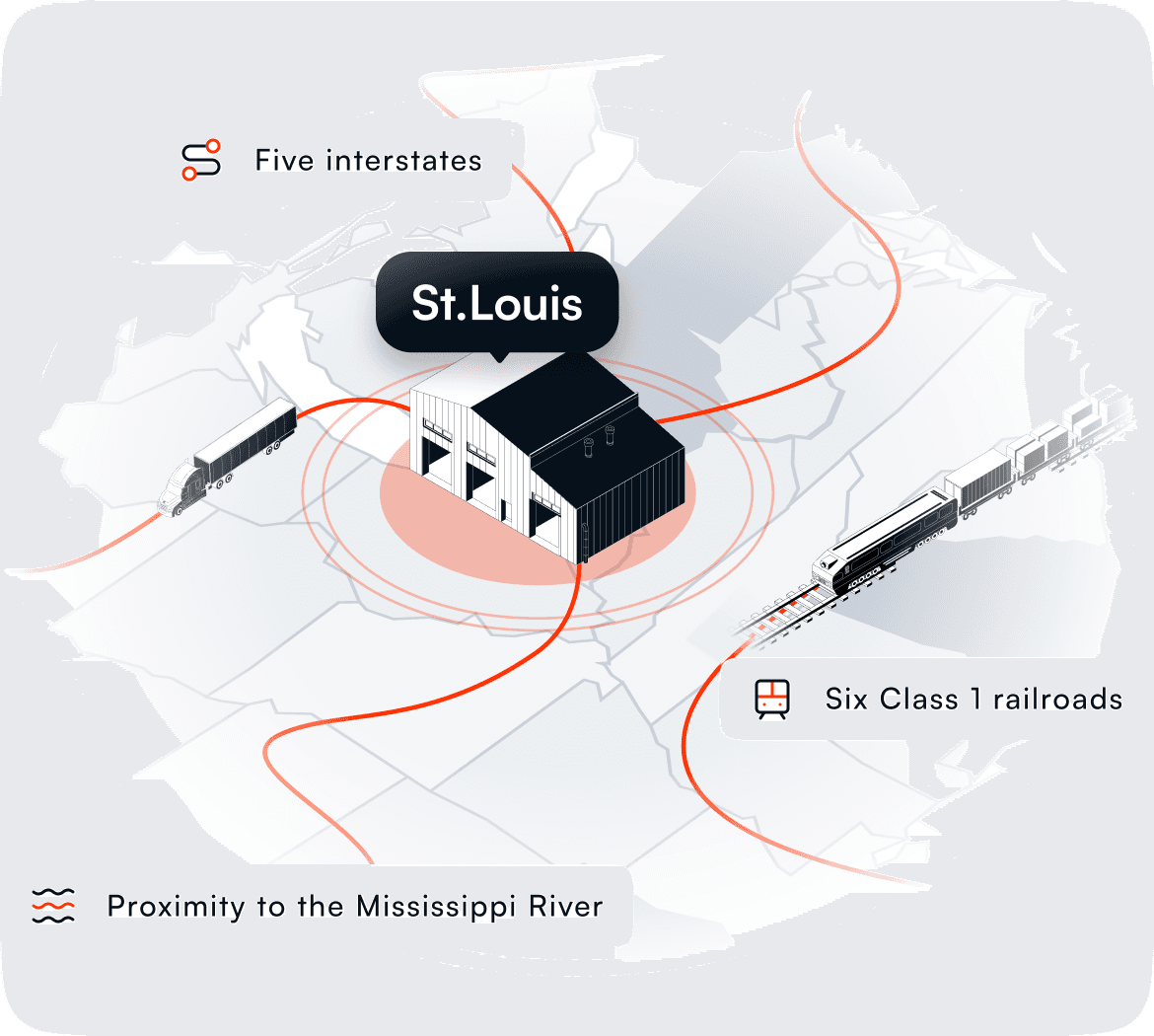
A broker's carrier network is only as good as the market it sits in. St. Louis is one of the more connected freight markets in the Midwest, with five interstates and six Class I railroads converging in the metro and direct access to Mississippi River barge traffic.
A broker headquartered there has daily visibility into local carrier capacity and seasonal lane patterns that a broker managing the same lanes remotely doesn't have. That's a separate advantage from the multi-mode consolidation itself, but the two compound: a St. Louis-based broker with multi-mode reach can move freight between truckload and intermodal on the same lane without losing the local carrier relationships that make either option reliable.
For shippers who also warehouse product in the region, a broker that's also a licensed 3PL operator removes one more seam: the same team that manages your freight also has visibility into your inventory, so a capacity problem on the outbound side doesn't get discovered separately by two different vendors.
This is close to the operating philosophy ITF Group was built around. CEO Sam Burkhan describes it this way: "We want our clients' problems to be given to us so we can solve them, which makes their lives easier." Reducing the number of separate vendor relationships a shipper has to hold together is a direct expression of that, not a side benefit. Read more about ITF Group's approach to combining brokerage and 3PL under one roof.
FAQs
01
What's the difference between a freight broker and a 3PL?
A freight broker arranges transportation between shippers and carriers across one or more modes. A third-party logistics provider (3PL) manages warehousing and fulfillment in addition to transportation. Some companies do both, which is what allows a single point of contact to manage inventory and outbound freight together instead of coordinating between two vendors.
02
Does using one broker across modes mean losing negotiating power on price?
Not necessarily. A broker with real carrier relationships across modes can shift freight to whichever mode is cheapest for a given lane and timeline, which is a pricing advantage a single-mode vendor can't offer. The tradeoff to watch is transparency: ask for cost-plus, itemized pricing so you can verify the broker isn't padding the convenience with hidden markup.
03
How many modes does a broker need to cover to call this "consolidation"?
There's no fixed number, but the test is whether the broker's coverage matches your actual freight mix. If 80% of your volume is truckload and LTL, a broker with deep TL/LTL relationships and passable intermodal access covers you. If you regularly move freight internationally, forwarding needs to be a real capability, not a pass-through to a subcontractor.
04
What happens to an existing carrier relationship I want to keep if I consolidate through a broker?
A broker can typically work around a carrier relationship you want to preserve, either by routing that carrier's lanes directly or by folding that carrier into the broker's network as a preferred partner. This is worth raising directly in the RFP or onboarding conversation rather than assuming it's automatic.
05
Is a multi-mode broker slower to react when one mode has a problem, since they're covering more ground?
It depends on how the broker is staffed. A broker with dedicated teams by mode, rather than one generalist covering everything, avoids the tradeoff. Ask how exception handling is staffed across modes before assuming coverage breadth comes at the cost of response time.
06
Should a shipper consolidate all modes at once, or phase it in?
Phasing it in is usually the lower-risk path. Moving the largest or most problematic mode first, truckload for most shippers, lets you evaluate the broker's actual performance before shifting LTL, intermodal, or forwarding volume over. A broker confident in their multi-mode coverage should be comfortable with a phased approach rather than requiring an all-or-nothing commitment upfront.
07
Does this model only work for large shippers with high freight volume?
No. The fragmented-carrier-market problem described above (97% of for-hire carriers running 10 trucks or fewer) affects small and mid-market shippers proportionally more than large ones, since a large shipper has the internal team to manage vendor sprawl and a smaller shipper usually doesn't. Consolidation tends to matter most for shippers in the middle: too much mixed-mode volume to manage informally, not enough internal logistics staff to manage five vendors well.

Talk to a Broker Who Covers Every Mode From One Location
If your freight spans truckload, LTL, intermodal, and international forwarding, and you’re managing that mix across separate vendors, it’s worth a conversation about what consolidating into one St. Louis freight broker relationship would actually change in your week. Request a freight rate to see how your current mode mix would price under one contact, or read how St. Louis’s carrier market specifically supports that model.


Explore More

Innovation
Trust
Focus
ITF Group Headquarters
11990 Missouri Bottom Rd, Hazelwood, MO, US, 63042.
Trucking, Warehousing & Logistics Services in St. Louis | Serving businesses nationwide since 2012
ITF Group Headquarters
11990 Missouri Bottom Rd, Hazelwood, MO, US, 63042.
Trucking, Warehousing & Logistics Services in St. Louis | Serving businesses nationwide since 2012
ITF Group Headquarters
11990 Missouri Bottom Rd, Hazelwood, MO, US, 63042.
Trucking, Warehousing & Logistics Services in St. Louis | Serving businesses nationwide since 2012