How Dedicated Shipping Supports Supply Chain Optimization
Blogs
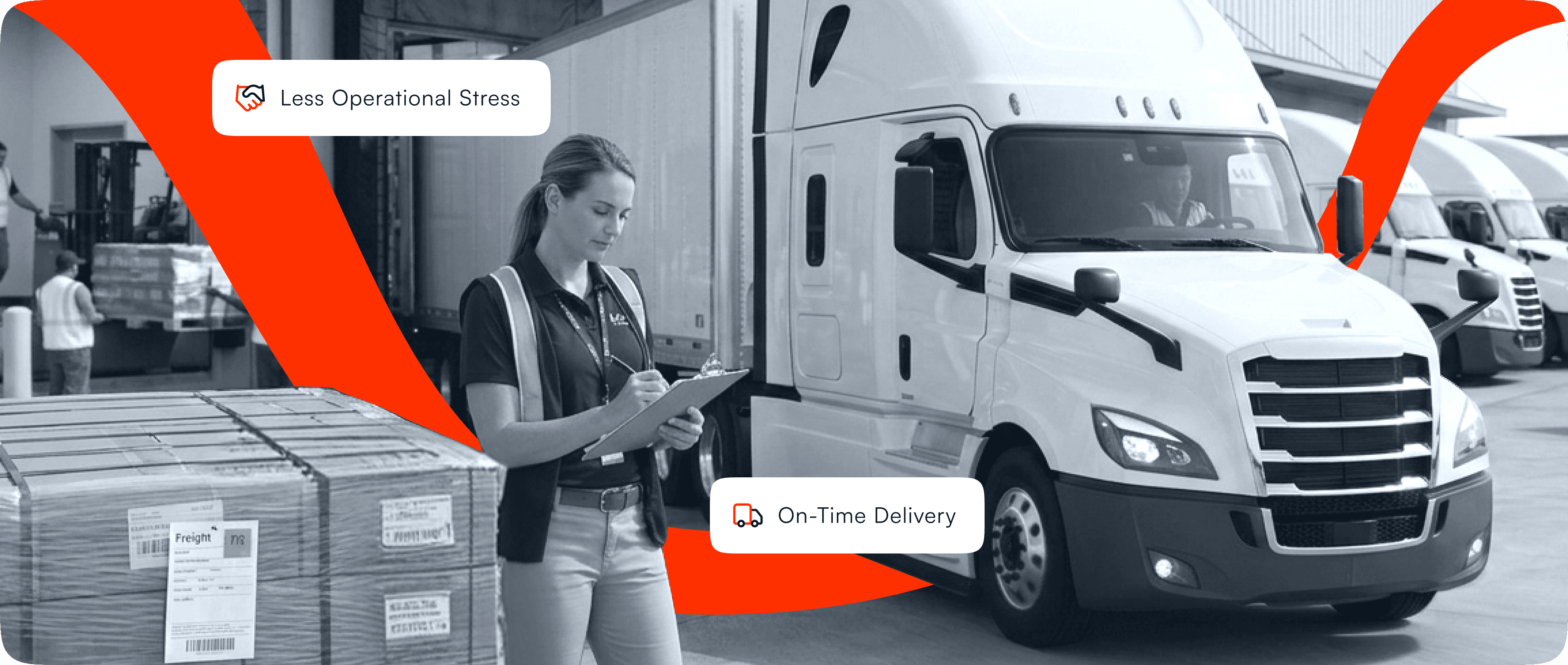
Dedicated shipping is a trucking arrangement where a shipper secures a fixed number of trucks, drivers, and scheduled runs for their specific lanes, instead of competing for capacity on the open spot market each time they need to move freight. For supply chains that depend on consistent, repeatable delivery windows, dedicated programs reduce rate volatility, improve on-time performance, and free the shipper's logistics team from re-booking loads every week.
What Is Dedicated Shipping?

Dedicated shipping means a carrier commits a defined set of equipment and drivers to serve a shipper's lanes exclusively or near-exclusively over a contract period, typically 12 to 36 months. Unlike spot or transactional freight, where trucks are booked load by load at prevailing market rates, a dedicated program establishes fixed schedules, agreed pricing, and contracted performance standards from the start.
The arrangement suits shippers with high-frequency, lane-consistent volume: a manufacturer moving raw materials from a supplier to a production facility on a daily cycle, a retailer replenishing distribution centers on a fixed schedule, or a food and beverage company running temperature-controlled deliveries to the same grocery accounts each week.
What Is Dedicated Shipping?
Dedicated shipping means a carrier commits a defined set of equipment and drivers to serve a shipper's lanes exclusively or near-exclusively over a contract period, typically 12 to 36 months. Unlike spot or transactional freight, where trucks are booked load by load at prevailing market rates, a dedicated program establishes fixed schedules, agreed pricing, and contracted performance standards from the start.
The arrangement suits shippers with high-frequency, lane-consistent volume: a manufacturer moving raw materials from a supplier to a production facility on a daily cycle, a retailer replenishing distribution centers on a fixed schedule, or a food and beverage company running temperature-controlled deliveries to the same grocery accounts each week.
What Is Dedicated Shipping?
Dedicated shipping means a carrier commits a defined set of equipment and drivers to serve a shipper's lanes exclusively or near-exclusively over a contract period, typically 12 to 36 months. Unlike spot or transactional freight, where trucks are booked load by load at prevailing market rates, a dedicated program establishes fixed schedules, agreed pricing, and contracted performance standards from the start.
The arrangement suits shippers with high-frequency, lane-consistent volume: a manufacturer moving raw materials from a supplier to a production facility on a daily cycle, a retailer replenishing distribution centers on a fixed schedule, or a food and beverage company running temperature-controlled deliveries to the same grocery accounts each week.
How Dedicated Freight Reduces Supply Chain Variability
Supply chain optimization depends on reducing variability at every handoff point. When transportation capacity is sourced load by load, rate swings, driver availability, and carrier reliability all introduce variability that ripples into production schedules, inventory levels, and customer delivery commitments.
A dedicated shipping program addresses three of the most common sources of that variability:
Rate stability. Contracted pricing removes exposure to spot market surges during peak season, regulatory changes, or regional capacity crunches. A manufacturer running 20 loads per week from St. Louis to Atlanta knows their freight spend for the next 18 months rather than re-pricing each week against an unpredictable market.
Capacity assurance. During periods of tight market capacity, spot freight gets expensive or unavailable. Shippers without dedicated capacity often find themselves unable to tender loads or having to pay two to three times the contracted equivalent. A dedicated program means those trucks are assigned and available regardless of what the broader market is doing.
Driver familiarity with your operation. Dedicated programs typically assign consistent drivers to specific accounts. Those drivers learn your dock procedures, your appointment windows, your contact protocols, and your freight handling requirements. Fewer load-to-load variables means fewer missed pickups, fewer OS&D events, and faster resolution when something does go wrong.
How Dedicated Freight Reduces Supply Chain Variability
Supply chain optimization depends on reducing variability at every handoff point. When transportation capacity is sourced load by load, rate swings, driver availability, and carrier reliability all introduce variability that ripples into production schedules, inventory levels, and customer delivery commitments.
A dedicated shipping program addresses three of the most common sources of that variability:
Rate stability. Contracted pricing removes exposure to spot market surges during peak season, regulatory changes, or regional capacity crunches. A manufacturer running 20 loads per week from St. Louis to Atlanta knows their freight spend for the next 18 months rather than re-pricing each week against an unpredictable market.
Capacity assurance. During periods of tight market capacity, spot freight gets expensive or unavailable. Shippers without dedicated capacity often find themselves unable to tender loads or having to pay two to three times the contracted equivalent. A dedicated program means those trucks are assigned and available regardless of what the broader market is doing.
Driver familiarity with your operation. Dedicated programs typically assign consistent drivers to specific accounts. Those drivers learn your dock procedures, your appointment windows, your contact protocols, and your freight handling requirements. Fewer load-to-load variables means fewer missed pickups, fewer OS&D events, and faster resolution when something does go wrong.
How Dedicated Freight Reduces Supply Chain Variability
Supply chain optimization depends on reducing variability at every handoff point. When transportation capacity is sourced load by load, rate swings, driver availability, and carrier reliability all introduce variability that ripples into production schedules, inventory levels, and customer delivery commitments.
A dedicated shipping program addresses three of the most common sources of that variability:
Rate stability. Contracted pricing removes exposure to spot market surges during peak season, regulatory changes, or regional capacity crunches. A manufacturer running 20 loads per week from St. Louis to Atlanta knows their freight spend for the next 18 months rather than re-pricing each week against an unpredictable market.
Capacity assurance. During periods of tight market capacity, spot freight gets expensive or unavailable. Shippers without dedicated capacity often find themselves unable to tender loads or having to pay two to three times the contracted equivalent. A dedicated program means those trucks are assigned and available regardless of what the broader market is doing.
Driver familiarity with your operation. Dedicated programs typically assign consistent drivers to specific accounts. Those drivers learn your dock procedures, your appointment windows, your contact protocols, and your freight handling requirements. Fewer load-to-load variables means fewer missed pickups, fewer OS&D events, and faster resolution when something does go wrong.
When Dedicated Shipping Makes Sense
Dedicated shipping programs deliver the most value when volume is predictable, and consistency has direct operational consequences. The right conditions generally include:
Freight volume of at least three to five loads per week on a given lane or origin point
Delivery windows tied to production schedules, retail compliance requirements, or customer OTIF agreements
High-value or time-sensitive freight where a missed delivery causes disproportionate downstream cost
Lanes where spot market volatility has created recurring budget overruns

For lower-volume or irregular freight, freight brokerage or managed transportation through a 3PL is typically more cost-effective than committing to a dedicated program. The decision comes down to whether the predictability premium is worth more than the flexibility of sourcing capacity as needed.
When Dedicated Shipping Makes Sense
Dedicated shipping programs deliver the most value when volume is predictable, and consistency has direct operational consequences. The right conditions generally include:
Freight volume of at least three to five loads per week on a given lane or origin point
Delivery windows tied to production schedules, retail compliance requirements, or customer OTIF agreements
High-value or time-sensitive freight where a missed delivery causes disproportionate downstream cost
Lanes where spot market volatility has created recurring budget overruns
For lower-volume or irregular freight, freight brokerage or managed transportation through a 3PL is typically more cost-effective than committing to a dedicated program. The decision comes down to whether the predictability premium is worth more than the flexibility of sourcing capacity as needed.
When Dedicated Shipping Makes Sense
Dedicated shipping programs deliver the most value when volume is predictable, and consistency has direct operational consequences. The right conditions generally include:
Freight volume of at least three to five loads per week on a given lane or origin point
Delivery windows tied to production schedules, retail compliance requirements, or customer OTIF agreements
High-value or time-sensitive freight where a missed delivery causes disproportionate downstream cost
Lanes where spot market volatility has created recurring budget overruns
For lower-volume or irregular freight, freight brokerage or managed transportation through a 3PL is typically more cost-effective than committing to a dedicated program. The decision comes down to whether the predictability premium is worth more than the flexibility of sourcing capacity as needed.
How ITF Group Structures Dedicated Programs
ITF Group operates a fleet of 500+ power units and 2,000+ trailers from its Hazelwood, Missouri headquarters, giving shippers access to owned capacity on dedicated lanes without the capital investment and management overhead of running an internal fleet. Dedicated programs through ITF Group include fixed scheduling, committed trucks, and documented performance standards on on-time delivery and pickup compliance.
Our trucking services cover FTL, LTL, power-only, drop trailer, and temperature-controlled configurations, which means dedicated programs can be structured around the specific equipment and service type each shipper's freight requires. Shippers running dedicated programs with owned equipment also benefit from our broader logistics network for overflow capacity, so a single provider covers both committed and spot requirements through one account team.
For shippers evaluating dedicated capacity in the St. Louis market, the right starting point is a lane analysis: what lanes run at sufficient frequency to justify a dedicated structure, and what does your current per-load cost look like against what a contracted program would deliver over 12 months? Schedule a call with our team, and we will run that analysis with you.
Dedicated trucking is one component of a broader 3PL and logistics strategy. For shippers evaluating the full scope of outsourced logistics, this guide covers how trucking, warehousing, brokerage, and forwarding fit together.
How ITF Group Structures Dedicated Programs
ITF Group operates a fleet of 500+ power units and 2,000+ trailers from its Hazelwood, Missouri headquarters, giving shippers access to owned capacity on dedicated lanes without the capital investment and management overhead of running an internal fleet. Dedicated programs through ITF Group include fixed scheduling, committed trucks, and documented performance standards on on-time delivery and pickup compliance.
Our trucking services cover FTL, LTL, power-only, drop trailer, and temperature-controlled configurations, which means dedicated programs can be structured around the specific equipment and service type each shipper's freight requires. Shippers running dedicated programs with owned equipment also benefit from our broader logistics network for overflow capacity, so a single provider covers both committed and spot requirements through one account team.
For shippers evaluating dedicated capacity in the St. Louis market, the right starting point is a lane analysis: what lanes run at sufficient frequency to justify a dedicated structure, and what does your current per-load cost look like against what a contracted program would deliver over 12 months? Schedule a call with our team, and we will run that analysis with you.
Dedicated trucking is one component of a broader 3PL and logistics strategy. For shippers evaluating the full scope of outsourced logistics, this guide covers how trucking, warehousing, brokerage, and forwarding fit together.
How ITF Group Structures Dedicated Programs
ITF Group operates a fleet of 500+ power units and 2,000+ trailers from its Hazelwood, Missouri headquarters, giving shippers access to owned capacity on dedicated lanes without the capital investment and management overhead of running an internal fleet. Dedicated programs through ITF Group include fixed scheduling, committed trucks, and documented performance standards on on-time delivery and pickup compliance.
Our trucking services cover FTL, LTL, power-only, drop trailer, and temperature-controlled configurations, which means dedicated programs can be structured around the specific equipment and service type each shipper's freight requires. Shippers running dedicated programs with owned equipment also benefit from our broader logistics network for overflow capacity, so a single provider covers both committed and spot requirements through one account team.
For shippers evaluating dedicated capacity in the St. Louis market, the right starting point is a lane analysis: what lanes run at sufficient frequency to justify a dedicated structure, and what does your current per-load cost look like against what a contracted program would deliver over 12 months? Schedule a call with our team, and we will run that analysis with you.
Dedicated trucking is one component of a broader 3PL and logistics strategy. For shippers evaluating the full scope of outsourced logistics, this guide covers how trucking, warehousing, brokerage, and forwarding fit together.
FAQs
01
What is the minimum freight volume needed for a dedicated shipping program?
Most dedicated programs require a minimum of three to five loads per week on a consistent lane. Below that threshold, freight brokerage or managed transportation typically delivers better cost efficiency than committing to dedicated equipment and drivers. Volume requirements vary by provider, lane length, and equipment type.
02
How does dedicated shipping differ from contract trucking?
Dedicated shipping assigns specific trucks and drivers to your account on a committed schedule. Contract trucking establishes agreed rates for a lane or region but does not guarantee specific equipment or driver assignments. Dedicated programs offer more consistency and driver familiarity with your operation; contract arrangements offer more flexibility.
03
Can a dedicated program run alongside spot freight brokerage?
Yes. Shippers typically use dedicated capacity for their highest-frequency, most predictable lanes and rely on freight brokerage for overflow, irregular lanes, or markets where volume does not justify dedicated equipment. ITF Group manages both through the same account team, so you are not managing two separate vendor relationships.

Ready to lock in capacity for your highest-priority lanes? Schedule a call, and let's talk about your supply chain.


Explore More

Innovation
Trust
Focus
ITF Group Headquarters
11990 Missouri Bottom Rd, Hazelwood, MO, US, 63042.
Trucking, Warehousing & Logistics Services in St. Louis | Serving businesses nationwide since 2012
ITF Group Headquarters
11990 Missouri Bottom Rd, Hazelwood, MO, US, 63042.
Trucking, Warehousing & Logistics Services in St. Louis | Serving businesses nationwide since 2012
ITF Group Headquarters
11990 Missouri Bottom Rd, Hazelwood, MO, US, 63042.
Trucking, Warehousing & Logistics Services in St. Louis | Serving businesses nationwide since 2012