What makes St. Louis a logistics hub?
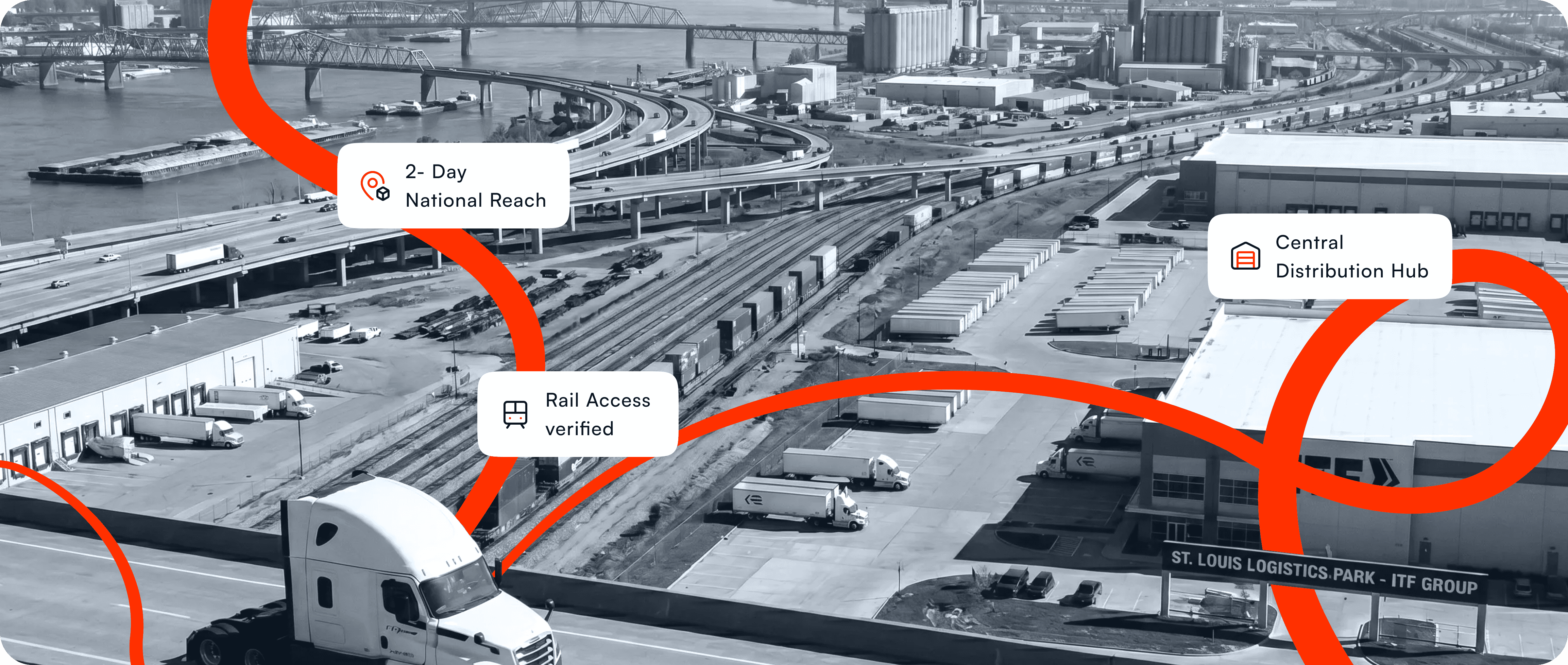
St. Louis is a logistics hub because four freight modes meet there at commercial scale. The region is the northernmost ice-free, lock-free port on the Mississippi River, the largest rail gateway between the eastern and western U.S., a junction for four interstate highways, and home to Lambert International Airport and the nearby cargo corridor. No other Midwest city offers that combination inside one metro.
The result is flexibility. A retailer with inbound containers from the Port of Houston can move them via rail to St. Louis, stage them in a regional warehouse, and truck them outbound to stores in 38 states within two days. A CPG brand can bring raw material in by barge, blend product at a bonded campus, and ship finished pallets across 14 lanes without changing carriers. That kind of flexibility is why our 3PL services were designed around modal choice rather than any single mode.

For a shipper evaluating where to plant a national hub, the question is usually not which city has the cheapest rent. It is which city collapses the most transit time across the widest set of customers. St. Louis tends to win that comparison in the middle of the country.

The geography: reaching most of the U.S. from one hub
From St. Louis, a truck can reach roughly a third of the U.S. population inside one day and most of the country inside two days. That radius covers every major retail metro east of the Rockies and down to the Gulf, including Chicago, Atlanta, Dallas, Nashville, Memphis, Kansas City, Indianapolis, Minneapolis, and Columbus. It also puts Houston and Charlotte inside a standard two-day FTL sleeper run.
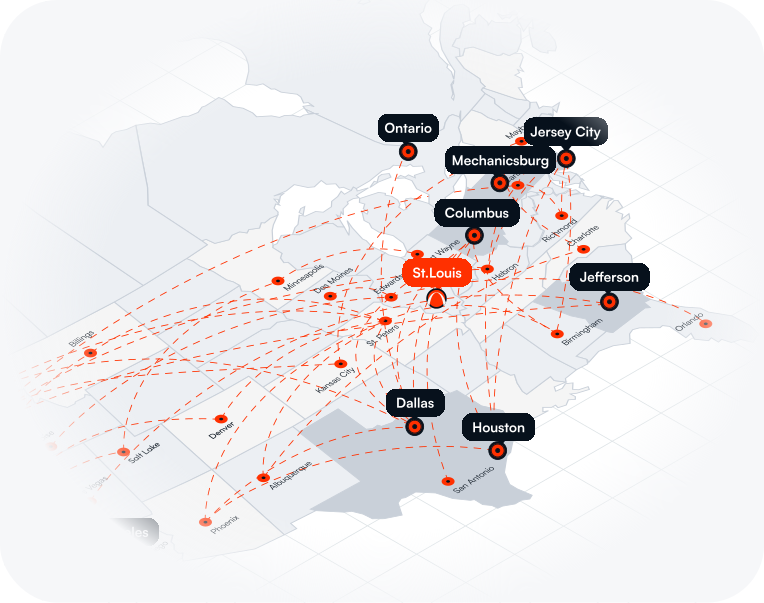
This matters for e-commerce. A St. Louis DC hitting 80% of the U.S. in two-day ground shipping does two things at once. It cuts parcel zone costs versus a coastal warehouse, and it opens an SLA most shippers can only promise from two coastal DCs. For mid-market brands that cannot yet afford East and West Coast fulfillment, one central U.S. fulfillment node often replaces two peripheral ones without cutting service.
The same radius favors retail distribution. FTL lanes from St. Louis to Walmart’s Sam’s Club campus in Bentonville, Target’s Savannah import hub, Kroger’s Louisville DC, and Amazon’s southern fulfillment belt all fall inside the standard 500 to 800 mile sweet spot for truckload economics. Fewer long-haul lanes means lower linehaul cost per stop and less driver time lost to hours-of-service limits.
Six Class I Railroads and the Mississippi River
Rail Network
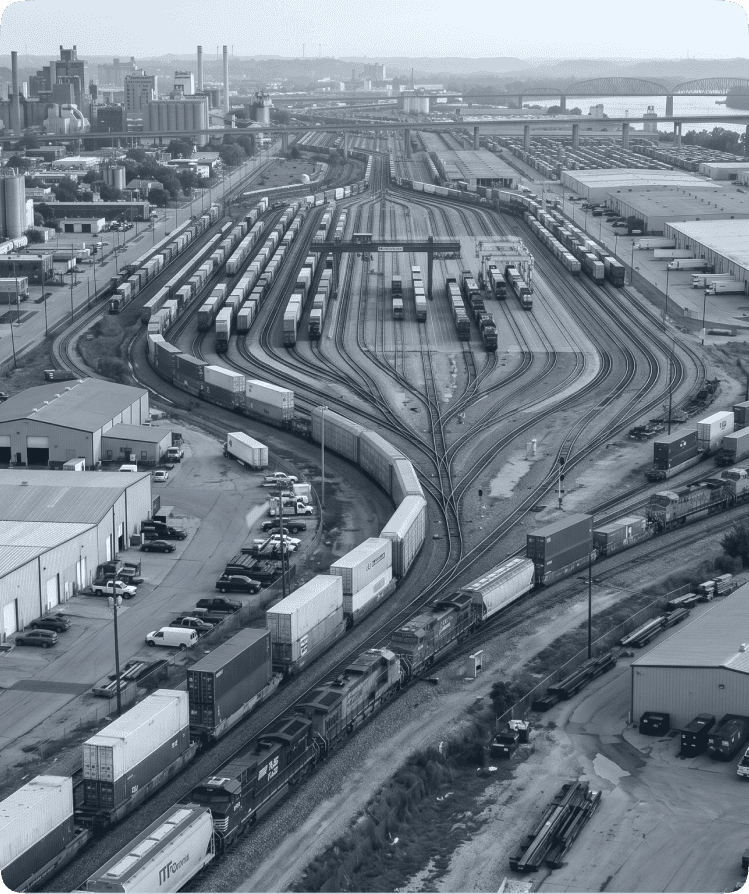
St. Louis is the only U.S. city served by all six Class I railroads (St. Louis Regional Freightway, 2024).
BNSF and Union Pacific move westbound.
Norfolk Southern and CSX move eastbound.
Canadian National and Canadian Pacific Kansas City round out the six, connecting Canadian and Mexican traffic through the region.
The Terminal Railroad Association operates the switching network that ties them together across the Mississippi, and a recent Merchants Bridge replacement doubled crossing capacity so two freight trains can cross the river at once.
River Freight

The river freight picture is equally strong. The St. Louis regional port system retains the top ranking for efficiency on U.S. inland waterways, moving roughly 369,000 tons per river mile versus a national average of 92,863 tons per river mile (St. Louis Regional Freightway, 2024).
The region also holds the number two ranking for total tonnage among inland port districts. Because the port is the northernmost ice-free, lock-free point on the Mississippi, it stays operational when river locks freeze upriver in peak winter.

For shippers, this multimodal density is a hedge.
When trucking rates spike, rail absorbs volume.
When rail service degrades, river barge is still moving.
ITF’s trucking fleet operates alongside these modes rather than against them, which is why our drayage and intermodal programs sit inside the same logistics stack as our FTL and LTL services.
Warehousing Capacity in St. Louis and Hazelwood
Warehousing in the St. Louis region is concentrated in two corridors.

Metro East, across the Mississippi in Illinois, holds the inland port terminals and the rail-served bulk campuses.
Both corridors have added capacity over the past three years as national shippers have shifted inventory closer to the middle of the country.
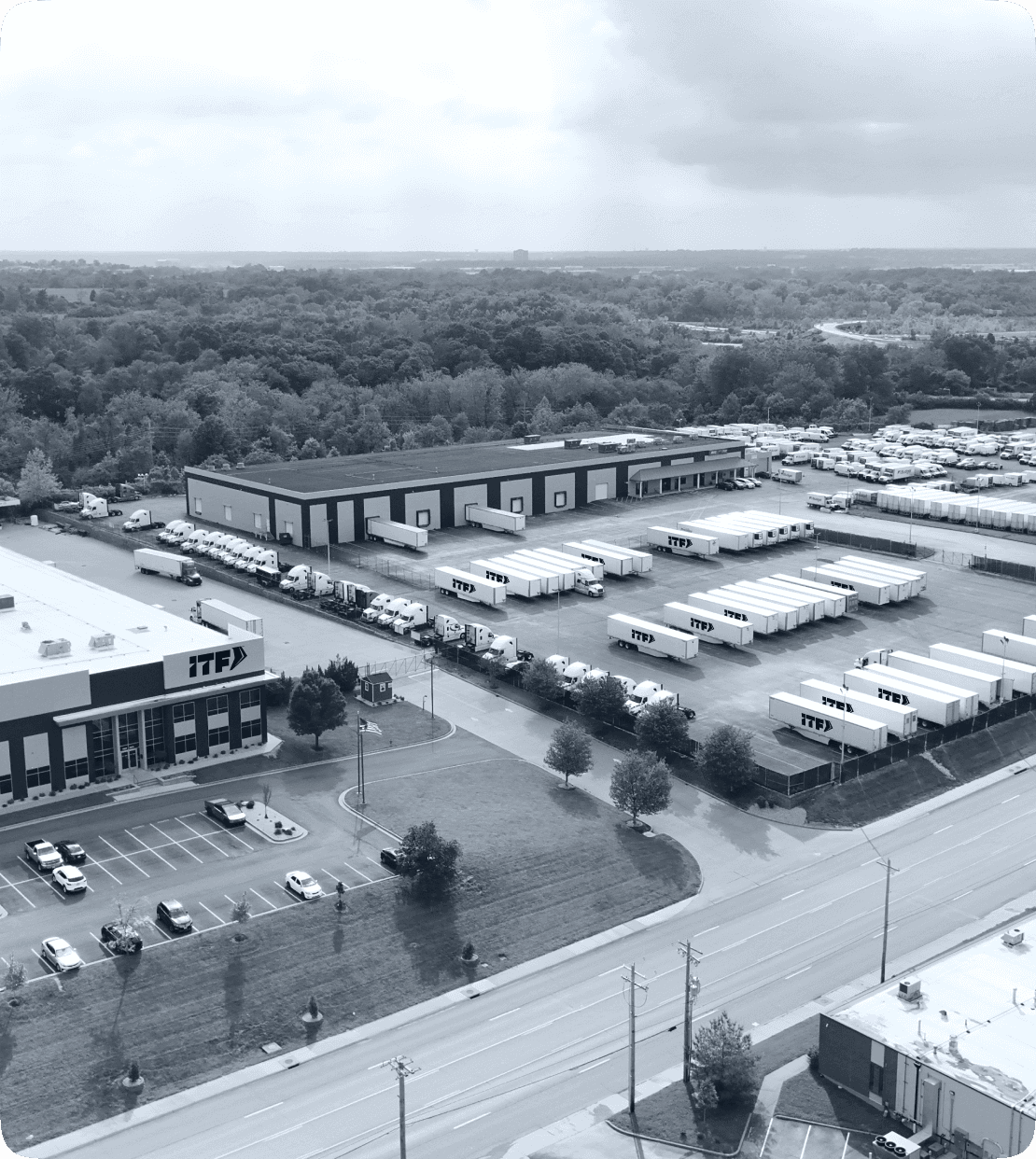
Our own footprint reflects that pattern. ITF Group operates more than 500,000 square feet of warehousing and fulfillment space across St. Louis and Hazelwood, with FDA food-grade and TSA air cargo certifications on the same campus. The facility handles retail pallet distribution, DTC e-commerce fulfillment, bonded storage, and kitting and labeling out of a single stock pool, which avoids the split inventory problem that drives most warehousing cost overruns.
The broader U.S. warehousing and distribution market grew to $131.5 billion in net revenue in 2024, rebounding 1.8% after a 12.8% decline in 2023 (Armstrong & Associates, 2025). That rebound has flowed toward central U.S. fulfillment, where per-SKU storage and outbound parcel costs sit below East Coast benchmarks. For a growing brand, the question is less whether to add Midwest capacity and more where in the Midwest to anchor it.

Shippers choose a St. Louis 3PL for three repeat reasons: modal flexibility, labor availability, and capacity density. A St. Louis logistics company typically operates its own trucking fleet, brokerage network, and warehouse campuses in the same metro, which means a single partner can handle inbound containerized freight, drayage from the port, cross-dock transfer, pick-and-pack, and outbound distribution without handing off between vendors.

U.S. business logistics costs hit $2.58 trillion in 2024, or 8.8% of GDP (CSCMP State of Logistics Report, 2025). Most of that growth came from rising water and truck transportation costs, not from warehousing. For shippers trying to contain the line items that actually moved, the answer has not been “find a cheaper warehouse.” It has been “combine more services under one partner in one geography and cut the handoffs.” That is what a St. Louis 3PL does structurally.
Industries the St. Louis Corridor Serves Well
St. Louis serves six industries well: e-commerce, retail, food and beverage, automotive, health and wellness, and manufacturing. Each one uses the same geographic advantage differently.

E-Commerce & Retail
Two-day ground parcel to 80% of the U.S. and FTL reach to the major big-box DCs in one shift.

Food & Beverage
River access for bulk inbound, FDA-certified warehouse campuses for staging, refrigerated trucking outbound for cold-chain lanes.

Automotive
Just-in-time trucking inbound to the Wentzville General Motors plant and outbound OEM lanes to the southern auto corridor.

Health & Wellness
Bonded storage, serial-level lot tracking, and TSA-certified air freight connections for time-sensitive product.
Manufacturing
Rail-served inbound raw material, outbound truckload to assembly plants, and bonded export handling through global forwarding.
The shared thread is that all six categories benefit from the same modal density. A fashion brand and a steel fabricator both win when rail, river, road, and air come together in one metro. That is unusual. In most U.S. cities, the shipper has to choose one or two modes and optimize around a weakness.
How ITF Group Built a National Network from St. Louis
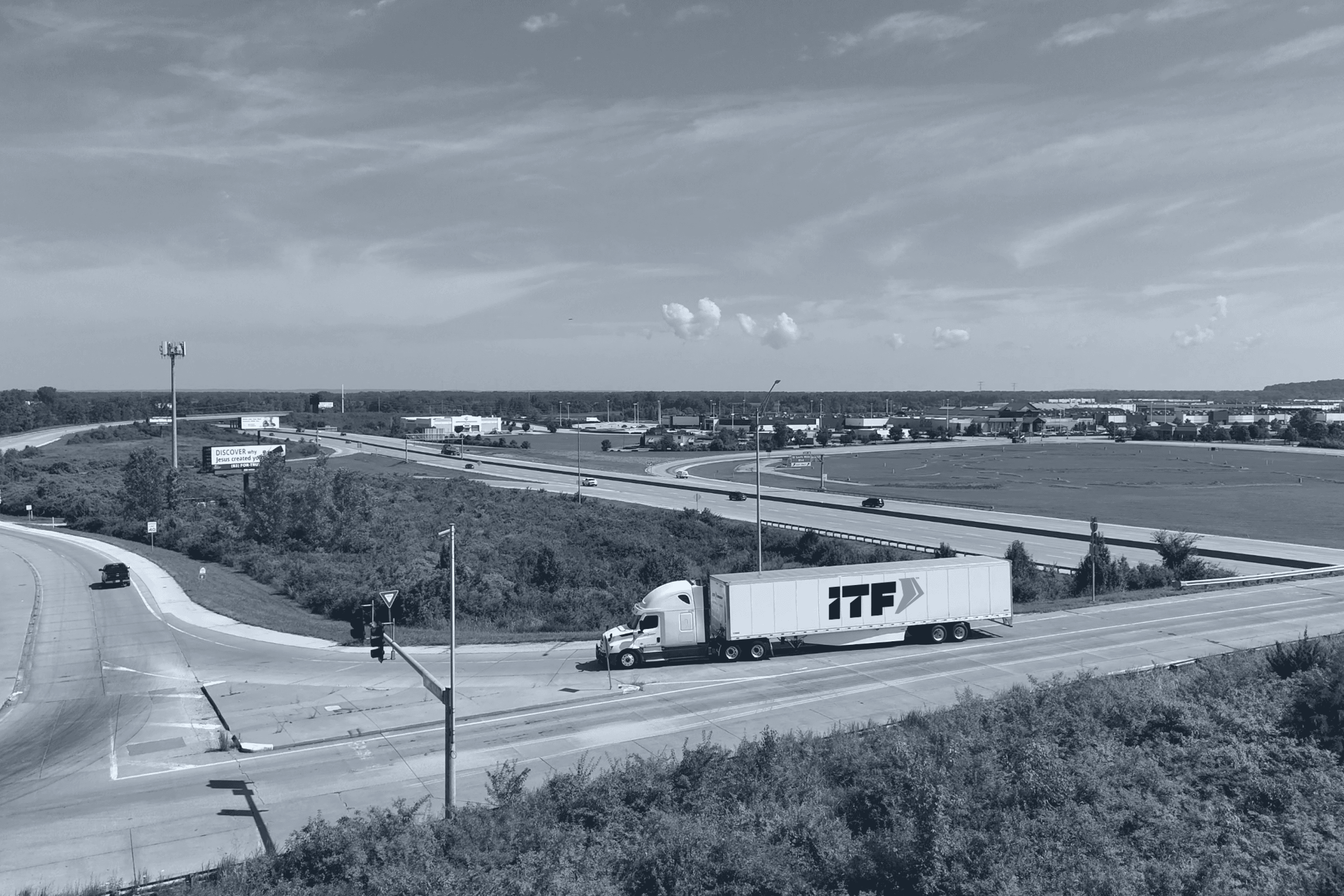
ITF started in St. Louis in 2012 with one truck, one trailer, and a short list of clients. Today the company operates more than 500 power units, 2,000 trailers, and over 500,000 square feet of warehousing from the same metro. Along the way, the company added freight brokerage across 40,000 vetted carriers, international forwarding across ocean, air, and intermodal lanes, and a cloud technology stack that runs WMS, TMS, yard, and fleet under one login.
The consolidation matters operationally. When our trucking fleet, our warehousing campus, and our technology stack share one roster of customer data, a chargeback dispute on a Walmart OTIF miss does not require three phone calls to three vendors. It requires one. That is what shippers mean when they call for "managed logistics" instead of an RFP full of point solutions.
The result on our side is a service mix that looks like a mid-market carrier and an enterprise 3PL at the same time. The result on the customer side is that a 12-truck shipper and a 1,200-truck shipper use the same team, the same portal, and the same city as their home base. A reference set from our customer case studies shows how that has played out across e-commerce, retail, and industrial accounts. The shape is always some version of managed logistics anchored to the St. Louis hub.
Is a St. Louis Hub Right for Your Supply Chain?
A St. Louis hub makes sense if any of the following apply to your freight profile:
Your customer base is spread across the eastern two-thirds of the U.S. and you want two-day ground coverage from one DC
Your inbound mix is split between East Coast ports, Gulf ports, and domestic rail
You sell into retail customers with strict OTIF programs and cannot afford long-haul transit risk
Your growth curve does not yet justify two coastal DCs
You need bonded, FDA, or TSA-certified storage for high-value or regulated product
It may not make sense if your orders cluster inside a single coastal metro, if your inbound is entirely West Coast containerized and stays there, or if your outbound is dominated by one-day parcel to a small list of ZIPs that a West Coast fulfillment center already serves.
For most mid-market and enterprise shippers building a national distribution footprint, St. Louis is the point of maximum modal coverage per unit of rent and labor cost. That is why ITF built its headquarters here, and why we keep hearing the same story from new customers: they went shopping for warehouse space in Chicago or Dallas, ran the two-day ground radius, and moved the conversation to St. Louis.
We focus on the now. You focus on what’s next.